Search This Blog

Monday, May 20, 2013

Fruit-Stuffed Pork Loin - Gutsy Cooks Club

May 19, 2013

This recipe, another one from Raymond, would be great for a dinner party.  Made with a 4-pound boneless pork roast, it serves at least 8 people.  I made it with a 2-pounder, and got 6 servings, so I think you could get 12 servings.
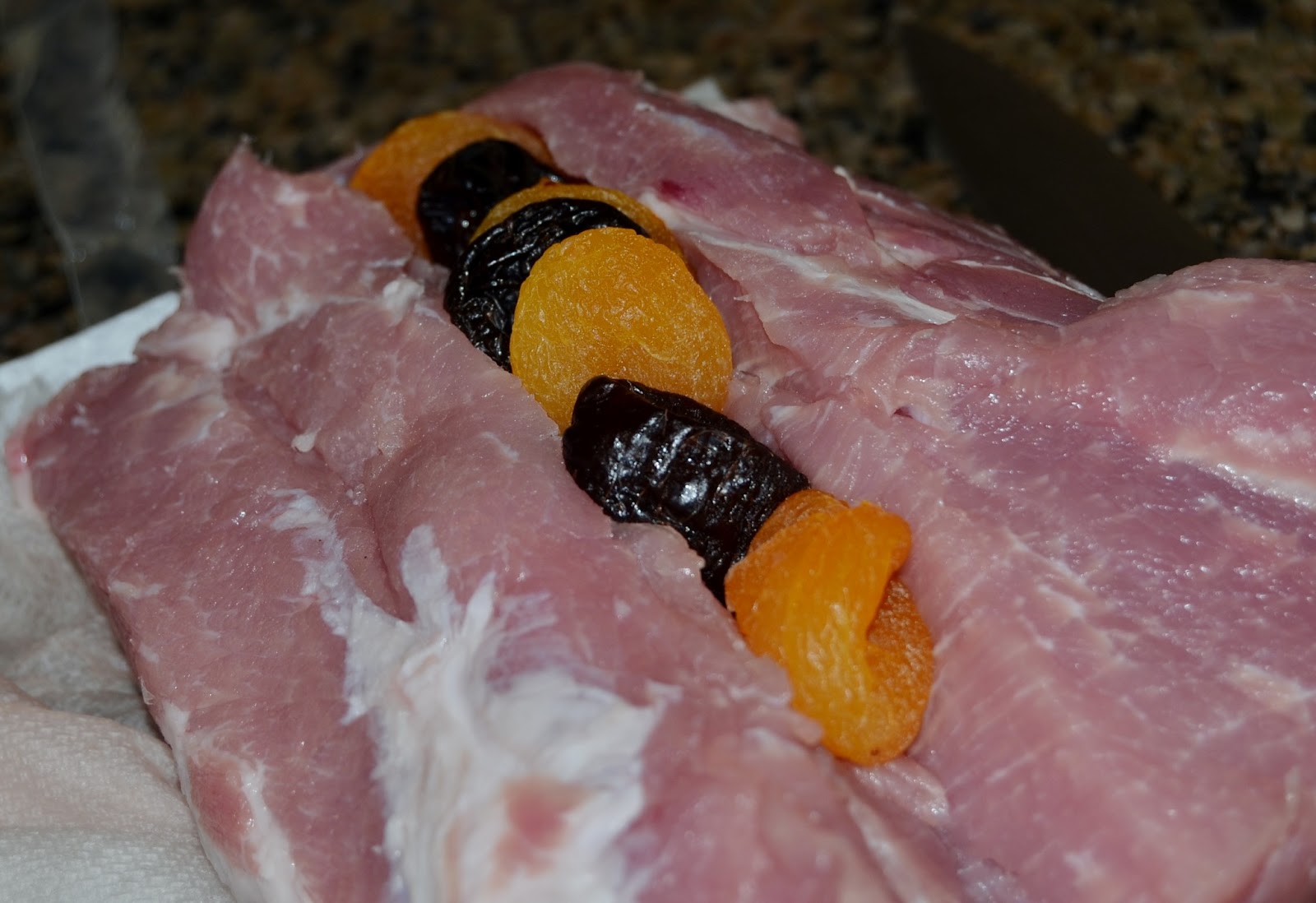

The only tricky part--and it wouldn't be tricky if you paid attention to what you were doing--was cutting a slit in the middle of the roast in which to stuff the fruit (prunes and dried apricots).  I had a very sharp knife (good) which I used carelessly (bad).  Not only did I cut through to the bottom of the roast, instead of just the middle, but I also tried to slice off the tip of my finger.  That made me feel like a Top Chef contestant--they're always cutting their fingers, and there are a lot of snarky comments by the other contestants if they abandon their project and go get stitches.  I was not a wuss.  I just wrapped enough bandages around my finger to stop the bleeding and soldiered on.


With the string tied tightly enough, the fruit stayed in the pork, even though it wasn't in the middle, as it was supposed to be.  I love the taste you get when you tuck garlic slivers in the top layer of fat in a pork roast.  And I love the flavor that the layer of fat adds.  Pork has become leaner and leaner over the years, and now a pork loin requires the kind of care that chicken breasts take--overcook either one by a tad, and it becomes dry.  It didn't hurt in the fat department that the roast was supposed to be slathered with half a stick of butter.      
Since it already had that nice layer of fat, I cut back on the butter--by a tablespoon.


I thought I had some madeira in my liquor cabinet, but it turned out that I didn't, and it was Sunday (in Minnesota, that means you can't buy anything with alcohol in it).  I was going to use ruby port as a substitute, but I spied this bottle of Calvados, which I thought would pair nicely with the pork.  And isn't Monica always telling us to go gutsy?  I'm a born recipe-follower, so making this substitution made me feel downright daring.  I skipped the molasses, too, because I don't much like it.


The 2-pound roast was in the oven for less than an hour when it reached 145 degrees, the recommended roasting temperature.  For those of us who grew up hearing horror stories about trichinosis, and whose mothers cooked the bejeesus out of pork, this is still slightly audacious, if not completely gutsy.


After resting for about 15 minutes, the pork was tender and juicy, with fruity notes from the Calvados, prunes, and apricots.  It's stunning visually, and really good.  Also easier than it looks, especially if you don't stab yourself while you're doing it.  I paired it with butter-braised Yukon Gold potatoes and sauteed cherry tomatoes.  But it's not hard to think of other go-withs that would taste great.

All of Raymonds four May recipes looked delicious.  So far, this is the only one I've been home to make, and I'm going to Chicago next week, so the other three have to go in my catch-up file.

TASTE-O-METER

Jim:  "I like it.  I'll give it an 8."  I guess he was feeling especially laconic.

Marie:  "I'll give it a 9, and I don't think I've ever given anything a 10 because a 10 is perfect.  So a 9 is kind of like a 10."

Sunday, April 7, 2013

Baked Chicken with Honey-Mustard Glaze - Gutsy Cooks Club


I guess that, after getting married, Monica was feeling like her life was no longer hectic enough, so she decided to re-invent the Gutsy Cooks Club.  This time the format is a little different--each cook will pick a cookbook of the month and pick a different recipe for each week.  Monica chose Lucinda Scala Quinn--new to me--who wrote Mad Hungry and Mad Hungry Cravings.

I served the chicken with couscous and haricots verts from Trader Joe's.


I have to say this was sort of a slapdash recipe.  One of the ingredients was "some fresh herbs (if you have them)," for example.  Well, even if I didn't have them, I could get them.  But if you've made this before, do you have any ideas about what might be especially apt?  I had basil, rosemary, and thyme, so I used them all, and they were fine, but I wouldn't have minded a hint.

More significantly, the recipe doesn't say what to do with the marinade.  My understanding is that the current thinking is that you shouldn't cook meat, especially, in the marinade.  But the last instruction in the recipe is to "save all those delicious, lemony, chicken juices that collected in the pan."  The only way that lemony juices are going to collect in the pan is if you pour the lemon marinade over the chicken while it's baking.  Well, I did it, and neither of us died (or even sickened), but still.


The other problem:  neither of us is a big fan of chicken thighs.  I didn't substitute breasts because 1) I wanted to try the recipe as is and 2) breasts would be more likely to dry out.


The honey-mustard-olive oil glaze gave the chicken pieces a nice brown crust.  Be very careful!  They went from barely browned to almost burned in a few seconds.  The glaze looked good.  But neither of us eats chicken skin, so it was pretty much wasted on us.

TASTE-O-METER:

Jim:  I'll give it a 5.  It's okay, but not great.  I don't particularly want to eat it again.  I didn't pick up the honey-mustard flavor, which might have made them better, but I didn't want to eat the skin.

Marie:  I agree with what Jim said, but I'd translate that to a 7, not a 5, because I think a 5 means "complete failure," and 7 means B-/C+.  I did eat a bite of the skin, and that did add another flavor dimension.  I might try a version with skinless, boneless chicken breasts, but that would really be an entirely different recipe.

Thursday, April 26, 2012

Navarin Printanier

Let's face it--lamb isn't a palate-pleaser for everyone. One Easter, Jim's family were dinner guests. I'd thought about making lamb, but decided against it because of the non palate-pleaser issue, and made an innocuous ham instead. But I thought I might as well find out people's stance on lamb, for future reference. I asked Jim's nephew, David, if he liked lamb. "Sure. I mean, I guess. Mom, do I like lamb?" (David was in his 40's at the time). Dwayne, Jim's sister's husband, got truly alarmed. "Lamb?! I hate lamb. Why would you ruin dinner with lamb? If you made lamb, I'll have to go to McDonald's to get something to eat." Dwayne was never one to hide his feelings. Would he have liked, or at least tolerated, this navarin? It's hard to imagine that he wouldn't, but stubbornness is powerful.
I started with the 3 pounds of lamb shoulder, as recommended. This is a lot of meat, and it needed to be trimmed of fat and gristle, but it was so delicious after being sauteed and braised.
And the spring vegetables tasted earthy and luscious.
All it needed to be printanier was the peas: not fresh, but still good. I don't quite agree with Dorie's assessment that frozen peas are as good as fresh ones, but they're definitely more obtainable.
Dinner is ready to be served.
And for dessert, a catch-up creme brulee--I used a rhubarb-strawberry jam because I thought it would be a nice foil for the sugary creaminess, but I wasn't crazy about the jam addition. I thought the dark brown sugar would be a nice addition, but it just turned out to burn more readily than white sugar. I think I'll stick to my old recipe.

Thursday, March 29, 2012

Crab (shrimp) and Grapefruit Salad - French Fridays with Dorie


There's not much to say about putting this salad together. It's really just a loose set of recommendations, and you could make it a dozen times with it tasting a little different every time. The essentials are grapefruit, some kind of greens, and seafood--the recipe specifies crab, but as I feared, there was no fresh crabmeat available in these parts. The only thing I saw was a large tin of expensive lump crabmeat. I bought this once before to make crab cakes, and, although it came highly recommended, I thought it was more than a few notches less satisfactory than fresh crab. So I substituted precooked shrimp, a substitution that made the salad a cinch to put together.
As happens more often than I'd like it to, I neglected to thoroughly read the recipe, and missed the step about cutting the grapefruit a few hours ahead of time. I dried it ferociously in paper towels, and I thought it was just fine. So I've just started this recipe, and I've already concluded that crab isn't necessary for a crab salad, and preparing the grapefruit ahead of time isn't necessary for a grapefruit salad.
While I started in this devil-may-care manner, I did everything else according to Hoyle. Cucumber, orange pepper, mint, chile pepper....everything else was just as it was supposed to be. I loved the fresh flavors of the chile and mint, and the general lightness and healthiness of the salad.


I piled a generous dollop of guacamole on top of the salad. For years, Jim has claimed to dislike avocados and guacamole. While we were in Mexico, though, he ate it twice a day (at least). I was a little unhappy that he ate it all, because I was thinking he'd eat around it and leave it for me. He claimed, though, that guacamole in Mexico was a completely different thing than guacamole in Minnesota. But I noticed that he ate his Minnesota guacamole too. Apparently he's getting flexible in his old age.

Friday, March 23, 2012

Cocoa Sablés - French Fridays with Dorie


Of all the 30-some recipes that I'm behind in FFWD, about a third of them are desserts. Not that I don't like desserts. Far from it. It's a matter of trust. No matter how much I like, say, a pan of potato gratin, I know I'm not going to go to the refrigerator and gobble up the leftovers in one sitting. Rich, chocolatey cookies? That's a different matter. So I wouldn't have dared make these unless I had a plan to give them away. A meeting where people love it when I bring in treats was scheduled for Monday afternoon. These people are all wild about chocolate and wild about cookies.


Not only is the dough chocolatized with cocoa (delicious Italian cocoa), but also with a quarter-pound of chopped bittersweet chocolate. This is considered optional, but I would say it's required.


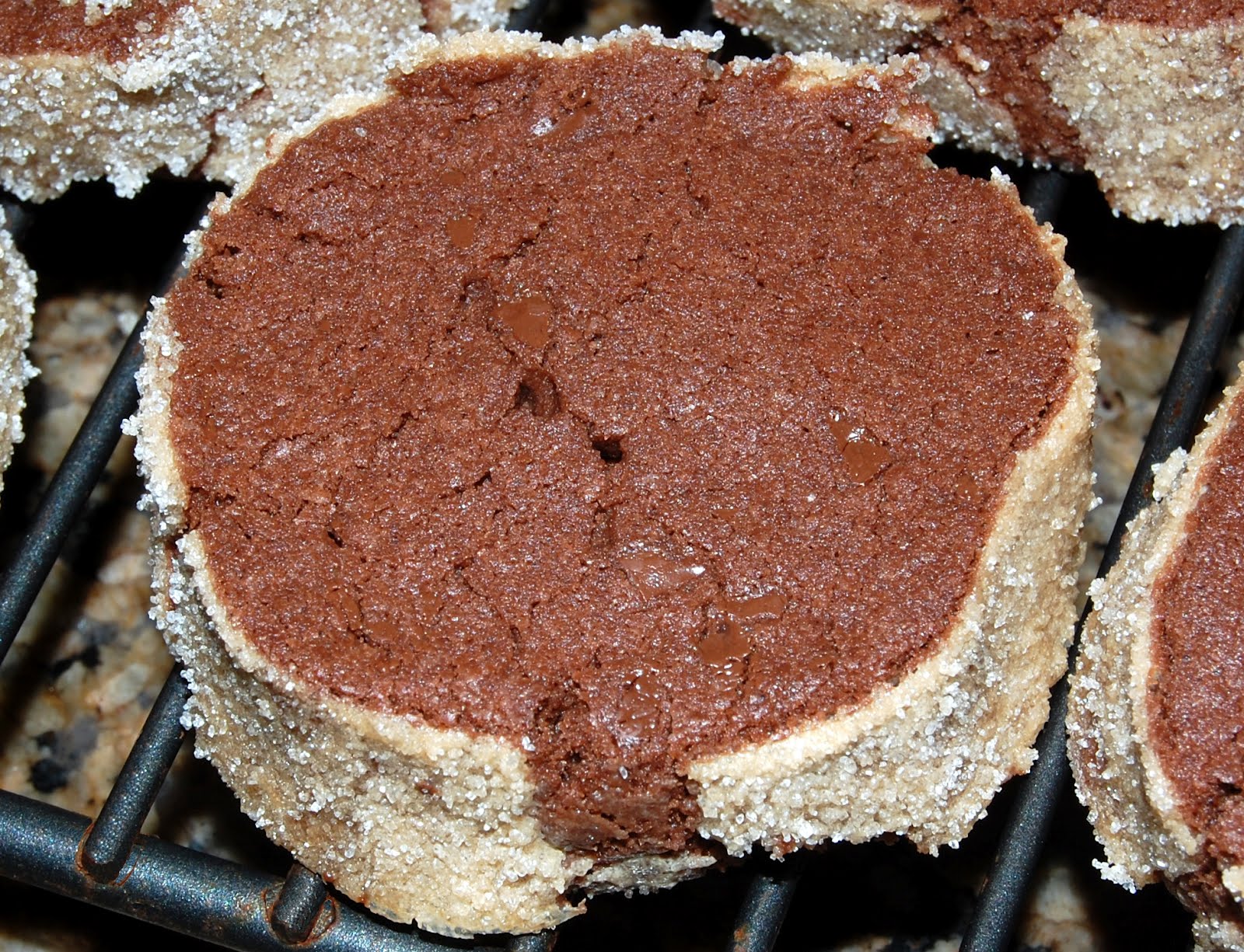
It makes a dark, dark cookie dough, which you roll out into a dark, dark cylinder.


If you don't read the recipe ahead of time annd want to make the cookies immediately, you're out of luck. I've done that before, but not this time, since I know by now that sables, being fancy refrigerator cookies, have to be refrigerated for a while. I made the dough in the morning, saw a movie in the afternoon, and baked the cookies in the evening--rolling the logs in sugar before slicing them and putting them in the oven.


Decorating sugar would have been nice, but I only had about two teaspoons, so granulated sugar had to work. They sugared cookies looked a little odd, I thought, but it at least gave some contrast to the dark cookies.


I was the hero of the hour when I brought a tin of cookies into the conference room. Never underestimate the power of chocolate.

And a catch-up salmon dish. This wasn't the best salmon I've ever had, or even that I've ever made. But it's the easiest. The French lentils cook very quickly, so dinner can be on the table in just over a half-hour.


AND a question: Do any of the other land-locked people out there have ideas about the crab for the upcoming salad? The only thing I've seen is a very expensive tin of crab meat, which I'd rather not buy. Do some of you have plans to substitute?

Thursday, March 15, 2012

Cheese Souffle - French Fridays with Dorie


Why have I never made a cheese souffle before? After making this, my first, I have no idea why it's taken me so long. If you can make a cheese sauce and beat egg whites, you can make a cheese souffle.


Seriously. It's that easy. You stir the butter and flour together long enough to get rid of the floury taste, then add hot milk, cheese, and egg yolks.


I used gruyere, which was lovely. But I think it might have been even lovelier to use a mixture. In fact, I'm pretty sure that a cheese souffle is a perfect vehicle for using up dribs and drabs of cheeses, as long you show a little restraint.


The egg whites are folded into the cheese sauce mixture, poured into souffle dishes, and put in the oven. That's it. Then you just have to wait.


I cut the recipe in half. My souffle dish was too big for a half-recipe, so I used a few small dishes. Here's what I learned. A rim at the top of a dish really messes with the souffle's rising.


I used two rimmed dishes and one without a rim. For some reason, the rim made the souffle crazy.


The one in the straight-sided dish was normal.


Both normal and crazy souffles tasted great.

Thursday, March 8, 2012

Saint-Germain-des-Pres Onion Biscuits

I'm on vacation in playa del Carmen, Mexico, and I'm trying to finish this post on my iPad so I can post it for FFWD. Which means posting it tonight because I have to get up early to go to Tulum tomorrow. Somehow getting up early on vacation is worse than getting up to go to work. I'm having problems editing this on the iPad, but it'll have to do.


I like biscuits as much as the next person. Maybe more. And I love French food. But I have a hard time equating the two concepts. The only French biscuit I know is pronounced bis-kwee and is a cake. But for the fun of having good biscuits I'm willing to play along.


Biscuits are fun to make as long as you remember to bring out the food processor instead of using forks or fingers to mix the dough. This is just one person's opinion, and if you think they're lighter, flakier, or more delicious if you make them the traditional way, good for you. But since I discovered the food processor method, there's no going back.


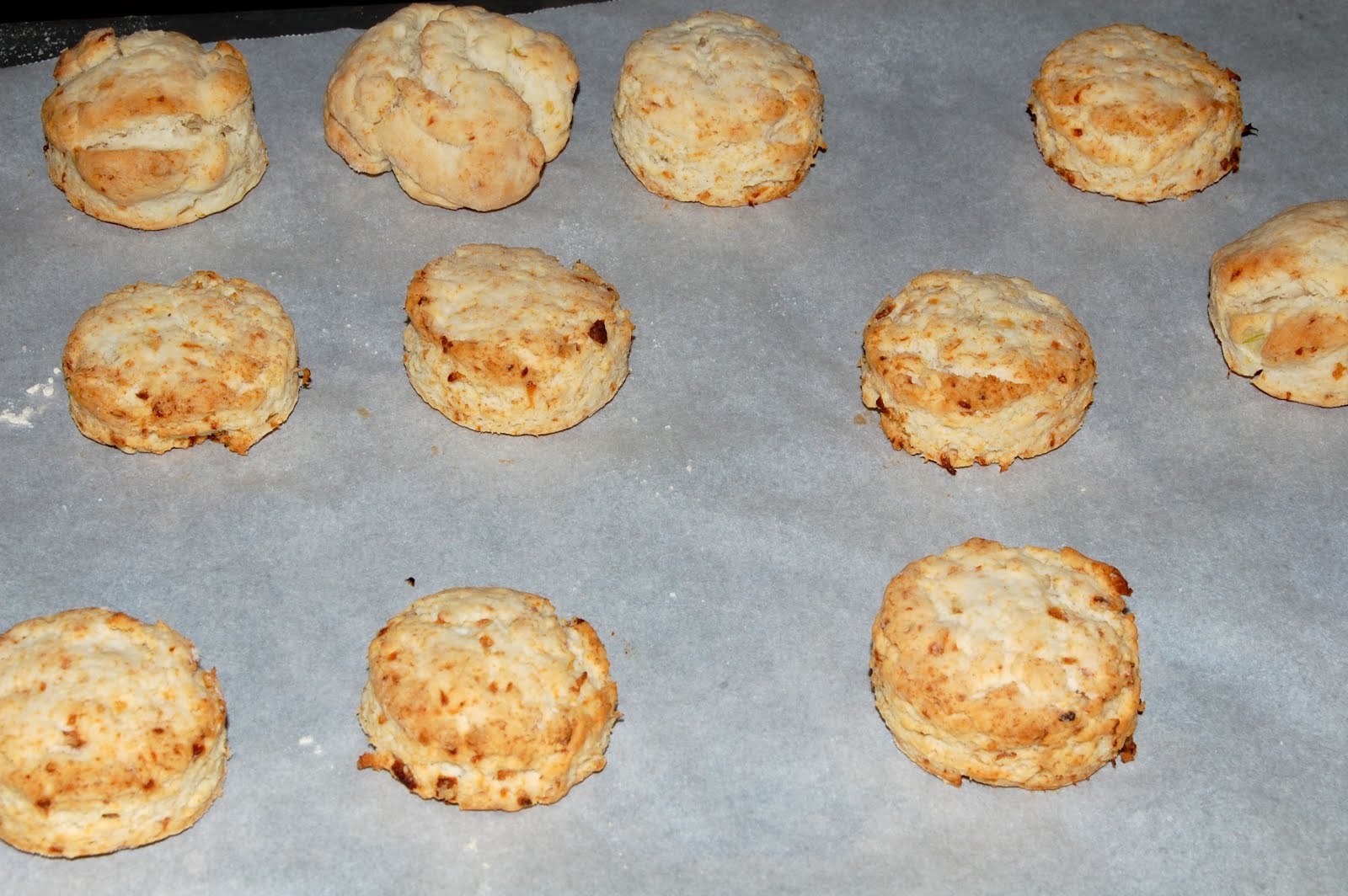
I love biscuits, and I thought these would be a terrific variation. They were a cinch to mix up and roll out, but I didn't think they had a lot of onion flavor. I was imagining how they'd taste with caramelized onions, and these onions, softened rather than browned, didn't measure up to my imaginary ones.