I wish I'd gotten on the short ribs bandwagon before it became a bandwagon--like back in the day when you could buy short ribs cheap because nobody wanted them. Now every restaurant worth its salt has some haute version of short ribs on its menu. Like, for instance, short ribs in red wine and port with Asian spice notes, finished with an orange-cilantro gremolata.
If I'd eaten this version at a restaurant, I'd be raving about it. Since I made it myself, modesty forbids raves. But it was quite good.
I liked the idea of broiling the short ribs instead of browning them in the pot. I could do them all at once, with no worries about crowding them so they'd steam rather than brown. I also think they yielded more fat this way (although there was plenty of fat still in them).
About twelve minutes total in the broiler, and they were brown and crispy on both sides.
Lots of vegetables to be cooked, but it looks like it's mostly onions. I was sure I had jar of star anise in my pantry, but apparently not. I substituted a pinch of five-spice powder, which I thought was rather clever of me (star anise is its first ingredient). I knew I had some ginger in my vegetable drawer, but when I looked at it closely, it was too tired and sad to use, so I substituted a pinch of powdered ginger. That was not particularly clever, but it worked to give a hint of ginger flavor. I didn't bother with the cheesecloth for the bouquet garni; I figured that since the broth was going to be strained, it was an unnecessary step. (I was also out of cheesecloth. I think it was hiding out with the star anise).
I love tomato paste in a tube. I used to buy a six-ounce can of tomato paste, use a tablespoon or two, put the rest in the refrigerator, and throw it out after a few weeks. This tube lasts indefinitely and is great for all those recipes that call for just a tablespoon.
I also love recipes that let you pour in whole bottles of wine, although I didn't use the whole bottle because it looked like my pan would overflow if I did. I didn't measure the ruby port, either--just poured in what seemed like enough glugs. This casual attitude about measuring is what caused me to shy away from baking for many years.
Here's the pot of vegetables and cooking liquids just before the meat went back in the pot. This is definitely not a weekday dinner (unless you want to eat at midnight), but it's not difficult, and there are about three hours of cooking time that are largely unattended.
When the short ribs are falling off the bone, you have two options: refrigerate and eat the next day or eat right away. I didn't want to wait another day to eat this great-smelling dish, so I just skimmed a little fat off the top, and we ate hearty.
The next day, when we ate leftovers, however, I saw the advantage of waiting. There was A LOT of hardened fat on the top of the plastic container. A really frightening amount, actually. In its congealed form, it was easy to remove, and the reheated ribs didn't suffer from a lack of flavor without it. In fact, flavor is what this dish is all about. The short ribs are succulent and beefy; the ginger and star anise, along with the port, give a hint of sweetness; and the orange/garlic/parsley gremolata (my husband hates cilantro) adds zest (no pun intended).
With mashed potatoes and plain steamed carrots, this was a wonderful winter meal. Another A+ for Dorie.
Search This Blog
Friday, February 25, 2011
Monday, February 21, 2011
Mushroom Risotto - a Gutsy Cooks Selection
Probably like most home cooks, I was initially intimidated by the idea of making risotto. It required some kind of special weird rice, I thought, and also required practically round-the-clock stirring. Then I tried it, and realized, like most home cooks have, that it's not that difficult. You can buy the rice at any grocery store, and, although you have to stay close to the stove, you really don't have to stir every second.
I've always used Arborio rice, but I bought some Carnaroli just for fun. But I still had about a cup of arborio left, so I actually used a mixture, and can't compare.
I love the step of cooking the rice and onions together--I have no idea why.
Full disclosure: I bought a package of pre-sliced, mixed mushrooms. I must have been feeling lazy on shopping day, but I wasn't sorry that they were already sliced. Secretly, I think that buying pre-sliced anything is a sign of moral decay. As with most other signs of moral decay, it's tempting to indulge occasionally.
Pouring in the heated broth (I used chicken stock instead of vegetable broth or water). I'm sure there's a scientific reason why the broth has to be heated. I just know that it does. I also know that risotto always takes far more liquid than you think it will, so you might as well heat it up to start with. Not taking my own advice, I ended up having to heat up some water toward the end of cooking time.
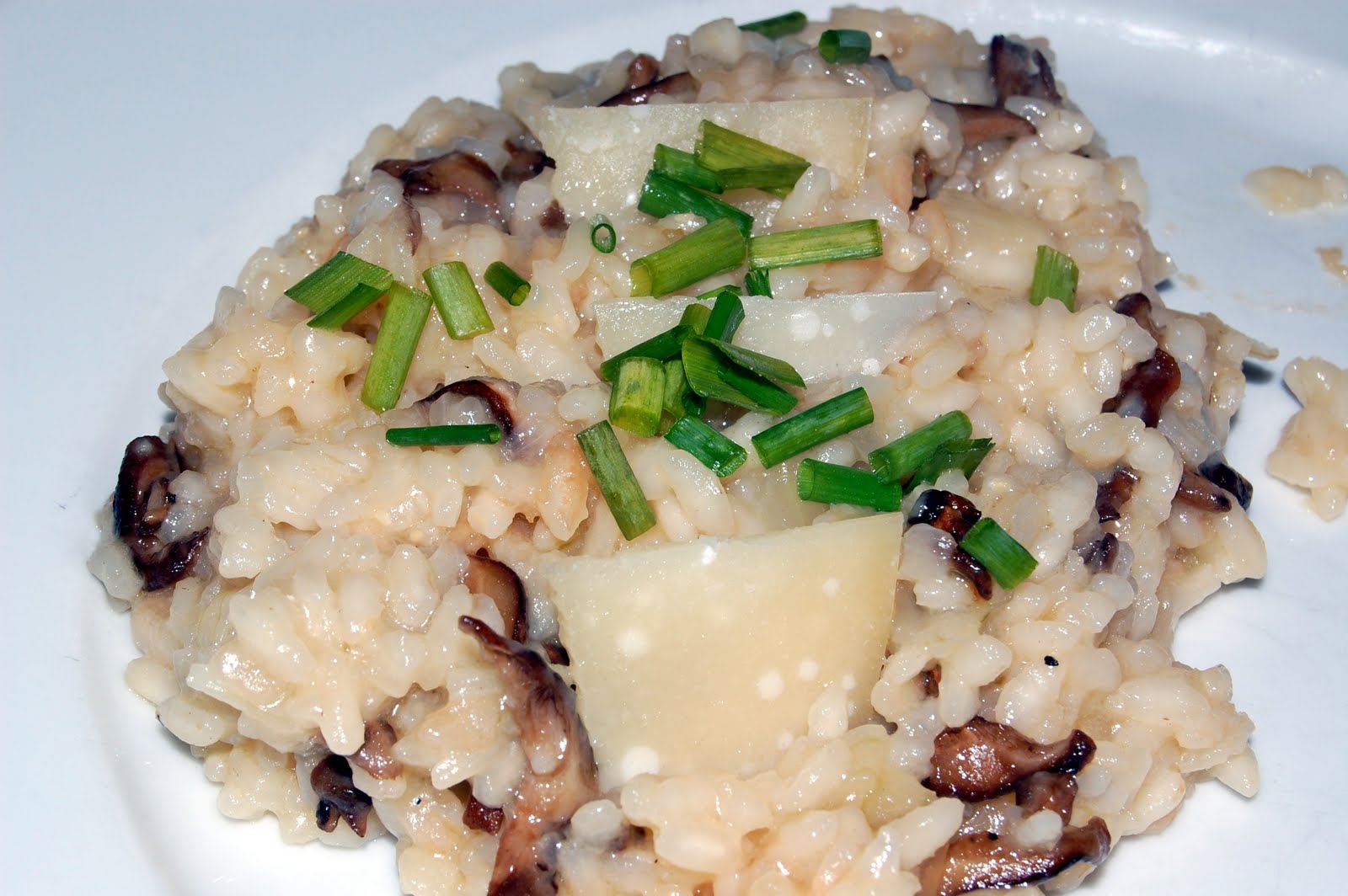
And, finally, adding the sauteed mushrooms and plenty of grated Parmesan. I don't always have Parmigiano Reggiano on hand, but I did this time. I had just a little bit left after I grated it; I cut that into thin shards and placed themn on top of the risotto. The bites that had the extra Parmesan were extra good.
Served with green beans with pancetta, from my French Fridays with Dorie assignment. A very nice dinner: at one time, I had all four burners of my stove occupied. This doesn't happen very often. When it does, I fear impending doom, but no doom occurred.
TASTE-O-METER RATINGS:
Jim: I'll give this an 8 1/2. But I'd give a 10 to the bites with melting cheese.
Marie: Also an 8 1/2. Good, but it still needed a little oomph. Maybe it was just missing the wine. Maybe it just needed more salt. Garlic? Some herbs?
You can find this recipe here.
I've always used Arborio rice, but I bought some Carnaroli just for fun. But I still had about a cup of arborio left, so I actually used a mixture, and can't compare.
I love the step of cooking the rice and onions together--I have no idea why.
Full disclosure: I bought a package of pre-sliced, mixed mushrooms. I must have been feeling lazy on shopping day, but I wasn't sorry that they were already sliced. Secretly, I think that buying pre-sliced anything is a sign of moral decay. As with most other signs of moral decay, it's tempting to indulge occasionally.
Pouring in the heated broth (I used chicken stock instead of vegetable broth or water). I'm sure there's a scientific reason why the broth has to be heated. I just know that it does. I also know that risotto always takes far more liquid than you think it will, so you might as well heat it up to start with. Not taking my own advice, I ended up having to heat up some water toward the end of cooking time.
And, finally, adding the sauteed mushrooms and plenty of grated Parmesan. I don't always have Parmigiano Reggiano on hand, but I did this time. I had just a little bit left after I grated it; I cut that into thin shards and placed themn on top of the risotto. The bites that had the extra Parmesan were extra good.
Served with green beans with pancetta, from my French Fridays with Dorie assignment. A very nice dinner: at one time, I had all four burners of my stove occupied. This doesn't happen very often. When it does, I fear impending doom, but no doom occurred.
TASTE-O-METER RATINGS:
Jim: I'll give this an 8 1/2. But I'd give a 10 to the bites with melting cheese.
Marie: Also an 8 1/2. Good, but it still needed a little oomph. Maybe it was just missing the wine. Maybe it just needed more salt. Garlic? Some herbs?
You can find this recipe here.
Saturday, February 19, 2011
Green Beans with Pancetta - French Fridays with Dorie
I love green beans. And the idea of cooking them until they're crisp tender, tossing them in a little butter and pancetta, and finishing them off with a drizzle of walnut oil sounded terrific. I thought it was very good, but maybe not quite terrific.
It took me more than two minutes to saute the pancetta "until frizzled and crisp." At the two-minute mark, the pancetta was still pretty limp. It's still not crisp enough for my taste in this picture, taken after about five minutes.
Beans in boiling water.
Beans in ice water. See how nice and green they are after being "shocked" by the cold water. I wish chefs would use a different word, like "refresh." I hate to shock the poor beans.
Back to the skillet, where they're reheated in a little butter, theoretically mixed with some of the pancetta fat that was rendered during the sauteeing process. My pancetta yielded only a few drops of fat. Apparently I bought pancetta Lite. This is the walnut oil I use. I keep it in the refrigerator because it otherwise goes rancid pretty quickly. It's still a good idea to give it a sniff before using it. If it's rancid, it'll only take a sniff to know it.
And there they are, ready to be served with mushroom risotto (or anything else you choose). As I said, I thought these were good, but not terrific. Even with all the good flavors, I thought something was missing. I think I'd saute a shallot with the pancetta next time. Or maybe they just needed another shake of the salt shaker. (I heard a chef say that the biggest mistake home cooks make is not salting enough--I know it's heresy to say this, but I like foods that have been properly salted.
Friday, February 4, 2011
Basque Potato Tortilla - French Fridays with Dorie
I don't usually like to repeat recipes--there are so many new things waiting to be tried--but the potato tortilla is an exception. Some things are best kept simple: potatoes, onions, olive oil, and eggs. That's all it takes to make this classic, and delicious, dish.
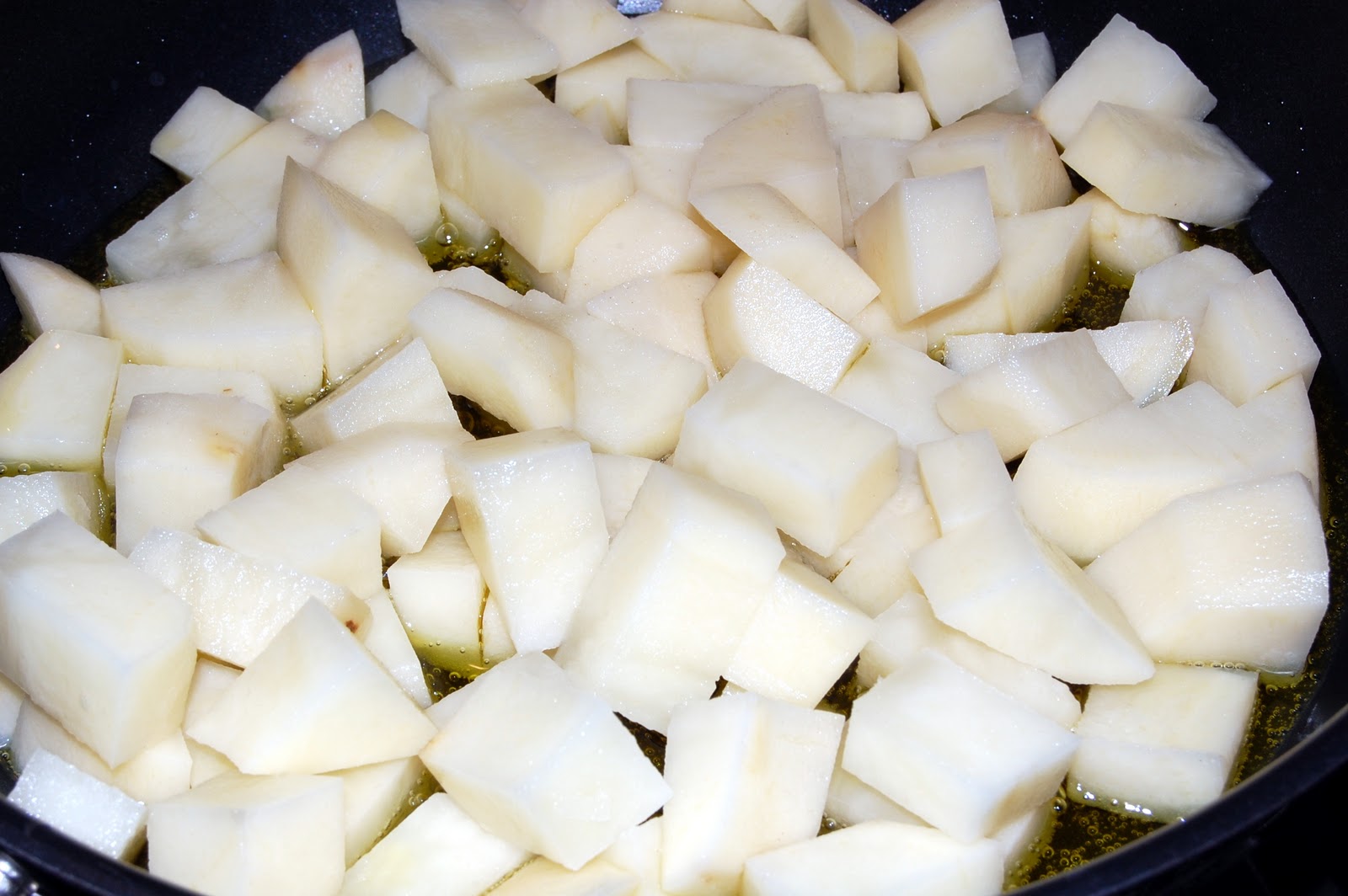
The method Dorie uses for this tortilla is a little different than the technique I learned. My tapas instructor said we should slice the potatoes (rather than dice them) and gently poach them in a LOT of olive oil. The disadvantage of this method is that it takes so much olive oil. The advantage is that the potatoes taste like olive oil. I wasn't sure the two tablespoons of oil used to cook the potatoes would be enough, but it worked.
I liked cooking the potatoes with garlic and rosemary. They both left their flavors behind, even though they got dumped before the final result. (It was nice not to have to take out the little green germ--a step that seems annoying to me, but I do it because I'm told to).
After the potatoes, onions, and eggs are mixed together, it takes only about five minutes until everything is almost cooked. If you didn't finish it under the broiler, though, the bottom would be too brown or the top would be too runny. I was hoping I could avoid the broiler step, but it turned out to be necessary.
Anytime you have to turn something over from a skillet to a plate, you hold your breath because things could go wrong. (At least I hold my breath--maybe everybody else keeps breathing). Nothing went wrong.
This is so good. The potatoes were cooked perfectly. I don't like al dente potatoes. The onions were just sweet enough. The eggs are pretty much a binder, but they taste good too.
I like the bonne idees--adding ham, spinach, herbs, or mushrooms--but it's so good just the way it is, I bet I'll never get around to any of the variations.
Thursday, January 27, 2011
Chicken B'Steeya (French Fridays with Dorie)
I'm planning (or, probably more accurately, hoping to plan) a trip to Morocco this fall, so cooking anything Moroccan is very exciting to me. Still, as I read the recipe for Chicken B'Steeya, I had my doubts. I wasn't sure how the egg and honey thickener would work; it seemed like there was a lot of chicken and very little else in the dish, and I was very unsure about the cinnamon-sugar treatment on top of the last layer of phyllo. Also, I remembered how frustrating it was to work with phyllo. Then I gave myself a little pep talk: "Marie, if you're willing to sleep in a tent in the Sahara (not sure I am, actually), you shouldn't let a little cinnamon and sugar stop you from making a new dish). So I forged ahead.
No matter how dubious I was about the cinnamon/sugar/honey combination, I was very happy that this b'steeya (or pastilla, or bisteeya, or bsteeya, or any of the other ways this word is transliterated), was not made with the traditional pigeon. I've never seen pigeon at any grocery store or meat market (granted, I haven't looked), and I'm not prepared to shoot my own, even though we do have nuisance pigeons in the neighborhood. So chicken was just fine with me. (If I get to Morocco, I may adopt the "don't ask, don't tell" food sampling rule).
The most exotic ingredient in this version of b'steeya is saffron.
The sauce is lemony chicken broth, reduced to just about a cup, and then thickened with egg yolks. Those eggs will scramble if I just put them in the pot, I said to myself, so cleverly, or so I thought, I gradually whisked the hot sauce into the eggs.
Well, that was a waste of time. The eggs scrambled anyway. I decided maybe that was the way it was supposed to be. Fortunately, no one was around to tell me anything different.
And, actually, when the chicken and parsley were mixed in with the eggy sauce, it no longer looked weird and curdled.
The phyllo was tricky, but it didn't matter because it was invisible on the bottom and tucked in on top. It looked good enough. I liked the addition of almonds.
With a few more tucked-in phyllo layers on top, lots of brushed-on butter, and the aforementioned sprinkling of cinnamon and sugar, the whole creation goes into the oven.
Oooh-pretty! I love how it's turned all brown and crispy. I needn't have worried about the cinnamon and sugar combination with the savory chicken. It didn't taste weird at all, and it made for caramelized bits of phyllo dough that made me want more.
A plus to this dish: it's also very good reheated the next day. I reheated it in a 300 degree oven, covered for about 15 minutes and uncovered for about 10. The top phyllo layers remained crisp, and the chicken tasted almost like a souffle. Moroccan comfort food that comforted this Minnesotan.
No matter how dubious I was about the cinnamon/sugar/honey combination, I was very happy that this b'steeya (or pastilla, or bisteeya, or bsteeya, or any of the other ways this word is transliterated), was not made with the traditional pigeon. I've never seen pigeon at any grocery store or meat market (granted, I haven't looked), and I'm not prepared to shoot my own, even though we do have nuisance pigeons in the neighborhood. So chicken was just fine with me. (If I get to Morocco, I may adopt the "don't ask, don't tell" food sampling rule).
The most exotic ingredient in this version of b'steeya is saffron.
The sauce is lemony chicken broth, reduced to just about a cup, and then thickened with egg yolks. Those eggs will scramble if I just put them in the pot, I said to myself, so cleverly, or so I thought, I gradually whisked the hot sauce into the eggs.
Well, that was a waste of time. The eggs scrambled anyway. I decided maybe that was the way it was supposed to be. Fortunately, no one was around to tell me anything different.
And, actually, when the chicken and parsley were mixed in with the eggy sauce, it no longer looked weird and curdled.
The phyllo was tricky, but it didn't matter because it was invisible on the bottom and tucked in on top. It looked good enough. I liked the addition of almonds.
With a few more tucked-in phyllo layers on top, lots of brushed-on butter, and the aforementioned sprinkling of cinnamon and sugar, the whole creation goes into the oven.
Oooh-pretty! I love how it's turned all brown and crispy. I needn't have worried about the cinnamon and sugar combination with the savory chicken. It didn't taste weird at all, and it made for caramelized bits of phyllo dough that made me want more.
A plus to this dish: it's also very good reheated the next day. I reheated it in a 300 degree oven, covered for about 15 minutes and uncovered for about 10. The top phyllo layers remained crisp, and the chicken tasted almost like a souffle. Moroccan comfort food that comforted this Minnesotan.
Monday, January 24, 2011
Spicy Shrimp Gratin - a Gutsy Cooks Selection
This was a perfectly good dinner (here is the recipe), but it wasn't as good as I had hoped. I love shrimp, hot peppers, slowly cooked onions, gruyere cheese, and creamy sauces, so I had great hopes for this dish. For me, the flavors just didn't come together, and its good parts didn't make a great whole.
As I've mentioned before, The Illustrated Kitchen Bible likes to make complicated recipes easy. I think this one took a few too many shortcuts.
The shrimp are initially marinated in lime juice and hot pepper sauce (I used Sriracha). Why? They're marinated for only about 15 minutes--not long enough to "cook" them, and the lime juice is drained before the shrimp are cooked. These flavors seem like the base for a spicy grilled shrimp dish, not a creamy gratin. And, while cookbook authors don't have to follow the rules, it would be nice to know what this author had in mind.
Onions and garlic sauteed in olive oil--the base for many a great dish. Here--another surprise--hot red peppers are added too. No objection to the peppers, but again, I'm wondering how they're going to work with the cream and gruyere.
The onions, garlic, and peppers form a bed for the marinated, drained shrimp.
A half-cup of cream (not cream sauce, not even heated cream) is poured over the shrimp. (I halved the recipe). Grated gruyere cheese is scattered atop, and the dish is placed in a preheated broiler.
The biggest cooking challenge with shrimp, as with most fish, is not overcooking them. Cooked perfectly, shrimp and tender and flavorful. Overcooked, they're a rubbery, chewy mess. I had concerns about broiling them because, with the cheese on top, the shrimp couldn't be turned midway for even cooking. Result? Top half a little overcooked, bottom half a little undercooked. If I'd cooked them for two minutes more, the whole thing would have been overdone. Maybe if a hot cream sauce had been poured over the cold shrimp, that would have helped with even cooking. The alternative method of baking probably would have also resulted in more even cooking, but 20 minutes sounds like way too long to bake shrimp.
The odd thing about this dish is that every bite was a little different. Some bites had more pepper in than others, so at times the shrimp seemed quite hot; other bites seemed creamier and milder. The cheese started to turn a little gluey before the shrimp were all eaten.
TASTE-O-METER:
Jim: I'll give it an 8. My first thought was 7 1/2, but then I decided I liked it a little better than that. I have to say I'm a little disappointed in this dish.
Marie: I agree. 8 was the number I had in mind too. Maybe my expectations were too high, but I thought the shrimp would turn out better than they did.
Tuesday, January 18, 2011
Hungarian Goulash Soup - a Gutsy Cooks Selection
The whole GC menu for this week was the soup, Potato-Parmesan cakes, and Profiteroles. I'm sad that I never have a chance to make the entire menu (and perhaps, she said hintingly, our Fearless Leader will one day reconsider this idea that we make three new recipes on one day). Although I've cooked from a lot of the menus, I'm way behind.
I'm with Raymond in my evaluation of this cookbook. When I first got it, the recipes seemed overly simplified, and I didn't think anything I cooked would amount to much. This was borne out by some of my first experiences, when Jim started calling it "the bad cookbook." But there have been some real winners from this book--simple, yes; boring, no.
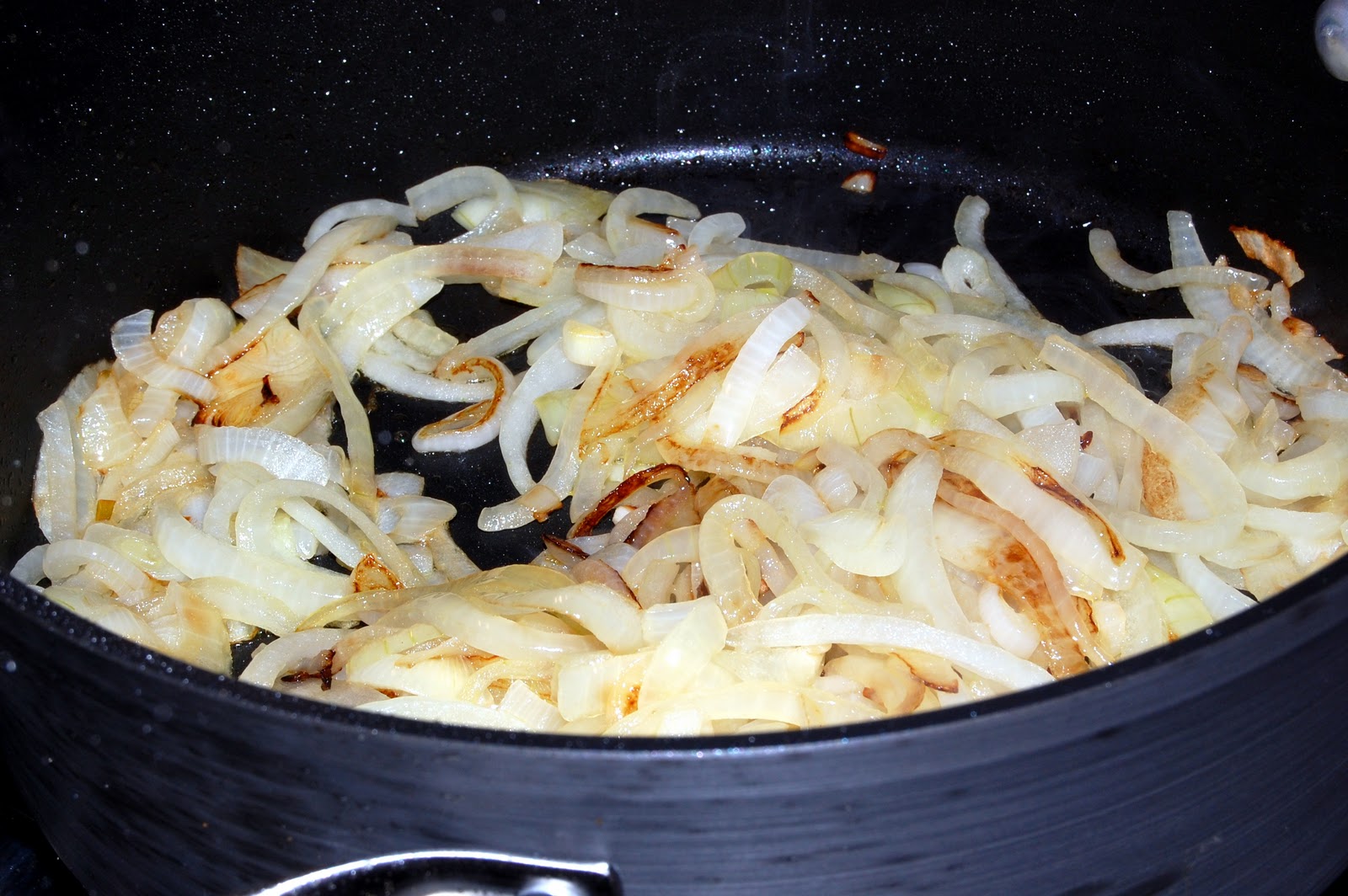
This soup is a good example. Here's the recipe in a nutshell. 1) Caramelize onions. 3) Brown beef. 3) Add spices and beef to onions. 4) Pour in beef broth. 5) Simmer until done.
I do think this would be a hard book to use if you had no experience in cooking. For example, the recipe says to brown the beef "in batches." But it doesn't explain this or tell you that if you try to brown all the beef at one time, you'll end up with steamed, not browned, meat. And it doesn't always tell you whether to use high, medium, or low heat when cooking, or whether to cover the pan or not. A novice cook has no basis for guessing.
In addition to the nicely browned meat and the lovely caramelized onions, the spices (paprika, cayenne, caraway seeds, and cloves) are heavenly after they've had time to meld. Authentic, too, I think.
I just used canned beef stock. (I was reluctant to use canned broth or stock for the French Onion soup from a few weeks ago, so I skipped that. For this recipe, though, with all the other flavors, I thought that packaged broth was a legitimate short-cut, so I did it. It worked out just fine).
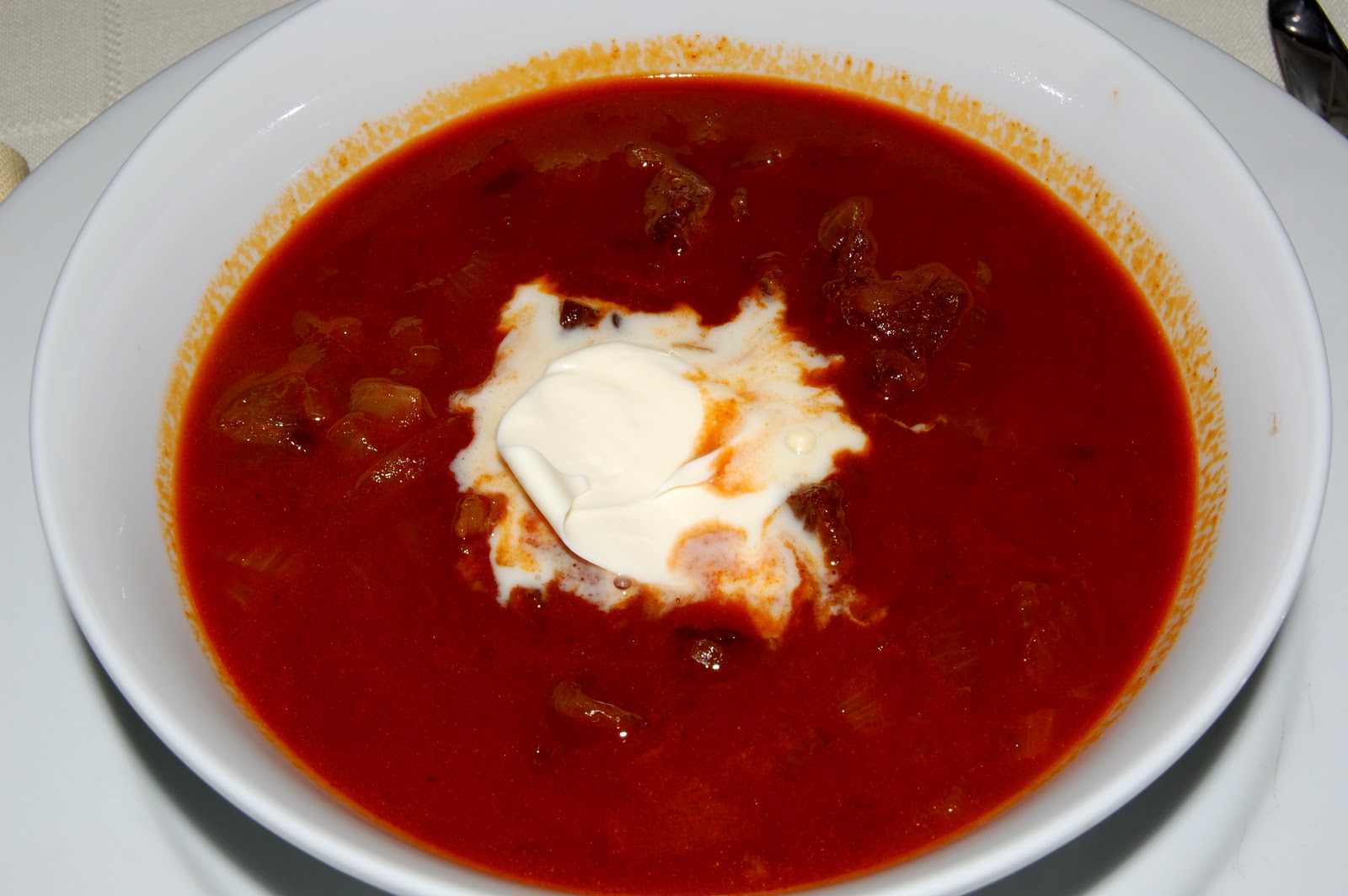
I thought I had sour cream in the refrigerator. I didn't, but did have creme fraiche, which turned out to taste so good in the soup that I think that's what I'd use next time.
TASTE-O-METER CONVERSATION:
Jim: "It's really good. I'll give it an 8 1/2."
Me: "8 1/2! If it's so good, why are you giving it an 8 1/2? Do you hate it?"
Jim: "8 1/2 is a perfectly good score. I don't hate it at all. I just gave the gnocchi a 9, and I don't like this quite as well as the gnocchi."
Sarah: "Dad, why are you comparing? Gnocchi is totally different than beef soup."
Me: "Yeah, how can you compare chocolate cake to soup?"
Jim: "You didn't make chocolate cake."
Me: "Well, I'd give it a 9."
Jim: "Well, I gave it an 8 1/2."
Sarah: "I'd give it a 10."
I'm with Raymond in my evaluation of this cookbook. When I first got it, the recipes seemed overly simplified, and I didn't think anything I cooked would amount to much. This was borne out by some of my first experiences, when Jim started calling it "the bad cookbook." But there have been some real winners from this book--simple, yes; boring, no.
This soup is a good example. Here's the recipe in a nutshell. 1) Caramelize onions. 3) Brown beef. 3) Add spices and beef to onions. 4) Pour in beef broth. 5) Simmer until done.
I do think this would be a hard book to use if you had no experience in cooking. For example, the recipe says to brown the beef "in batches." But it doesn't explain this or tell you that if you try to brown all the beef at one time, you'll end up with steamed, not browned, meat. And it doesn't always tell you whether to use high, medium, or low heat when cooking, or whether to cover the pan or not. A novice cook has no basis for guessing.
In addition to the nicely browned meat and the lovely caramelized onions, the spices (paprika, cayenne, caraway seeds, and cloves) are heavenly after they've had time to meld. Authentic, too, I think.
I just used canned beef stock. (I was reluctant to use canned broth or stock for the French Onion soup from a few weeks ago, so I skipped that. For this recipe, though, with all the other flavors, I thought that packaged broth was a legitimate short-cut, so I did it. It worked out just fine).
I thought I had sour cream in the refrigerator. I didn't, but did have creme fraiche, which turned out to taste so good in the soup that I think that's what I'd use next time.
TASTE-O-METER CONVERSATION:
Jim: "It's really good. I'll give it an 8 1/2."
Me: "8 1/2! If it's so good, why are you giving it an 8 1/2? Do you hate it?"
Jim: "8 1/2 is a perfectly good score. I don't hate it at all. I just gave the gnocchi a 9, and I don't like this quite as well as the gnocchi."
Sarah: "Dad, why are you comparing? Gnocchi is totally different than beef soup."
Me: "Yeah, how can you compare chocolate cake to soup?"
Jim: "You didn't make chocolate cake."
Me: "Well, I'd give it a 9."
Jim: "Well, I gave it an 8 1/2."
Sarah: "I'd give it a 10."
Subscribe to:
Posts (Atom)